A proof of an implication explains how to obtain its conclusion from its hypothesis. A function explains how to obtain an output from an input. Making this resemblance precise required a language of functions, a discipline of types, and a detailed analysis of proof rules.
The result is usually called the Curry–Howard correspondence. It is a family of exact relationships between particular calculi. Understanding one small correspondence is more informative than memorizing a table of slogans.

Sources and credit for William A. Howard
Andrej Bauer, 22 May 2004, CC BY-SA 2.5 Slovenia, via Wikimedia Commons Image source · CC BY-SA 2.5 si · Biographical dates
Functions without unnecessary notation
Moses Schönfinkel's 1924 paper developed combinators: operations designed to express combinations of functions without bound variables. Haskell Curry extended combinatory logic and investigated its connections with logic.
Alonzo Church developed lambda calculus in the early 1930s, initially within a larger foundational project. Inconsistency results affected that original logical system, while lambda calculus continued as a mathematical account of functions and computation.
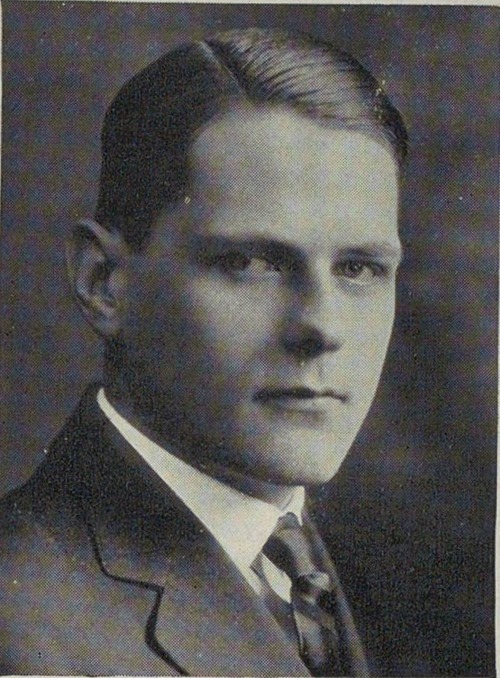
Sources and credit for Alonzo Church
Photographer not identified. Nassau Herald, 1924, p. 101; Princeton University Library. Portrait extracted from the page; no retouching. Image source · Public domain (published before 1931) · Biographical dates
.jpg)
Sources and credit for Moses Schönfinkel
Open Logic. Via Wikimedia Commons. Image source · CC BY-SA 4.0 · Biographical dates
The untyped lambda calculus has three basic forms:
A term is a variable, an abstraction, or an application. In , the variable is bound in . Application associates to the left, so means .
The expression represents the identity function. Applying it to gives
The general computation rule is beta reduction:
Substitution must avoid capturing free variables. For example, substituting for in requires renaming the bound variable first. The result can be ; writing would change the meaning.
Computation without guaranteed termination
Lambda terms can represent arithmetic and general effective computation. The computability note placed Church's results alongside recursive functions and Turing machines.
This expressive power includes divergence. Let
A beta step returns exactly the same term. There is no normal form.
The Church–Rosser theorem establishes confluence of beta reduction: if a term reduces along two finite paths, the resulting terms have a common reduct. Consequently, a normal form, when it exists, is unique up to the usual renaming of bound variables.
Confluence does not say that every term terminates. It does not even say that every reduction strategy reaches a normal form whenever one exists. An evaluator can spend forever reducing inside an argument that another evaluation strategy would discard.
These distinctions become central when a calculus is used both to execute programs and to represent proofs.
Adding simple types
In the simply typed lambda calculus, types can be built from atomic types using the function constructor .
A context records variable assumptions, such as . The judgment
says that has type under the assumptions in .
Two rules expose the connection with implication:
Abstraction discharges an input assumption. Application uses a function together with a suitable input.
Church's 1940 simple type theory belongs to this history, although its full logical setting includes choices different from the purely intuitionistic correspondence developed below. “Typed” does not by itself determine whether a logic is classical or constructive.
Constructing a proof and a term together
Consider the proposition
Assume . Under that assumption, also assume . The original assumption already supplies . Discharge the assumption to obtain , then discharge to obtain the whole proposition.
Attach names to the assumptions. Let and . The proof of is represented by . Discharging creates , and discharging creates
The type of is .
Now give it a term and a term :
On the proof side, introducing an implication and then immediately eliminating it creates a detour. Removing that detour substitutes the supplied proof for the discharged assumption.
Beta reduction is therefore the computational counterpart of this proof normalization step. The correspondence concerns the internal structure and transformation of derivations, not just a resemblance between the words “proof” and “program.”
The example also depends on permitting an unused assumption . In a strictly linear fragment, that use of weakening would need justification, connecting this note with the preceding discussion of structural rules.
From Curry's observation to Howard's formulation
Curry had recognized relationships between types of combinators and implicational logic. William Howard's 1969 manuscript, published in 1980 as “The Formulae-as-Types Notion of Construction,” developed the connection with natural deduction and constructive arithmetic.
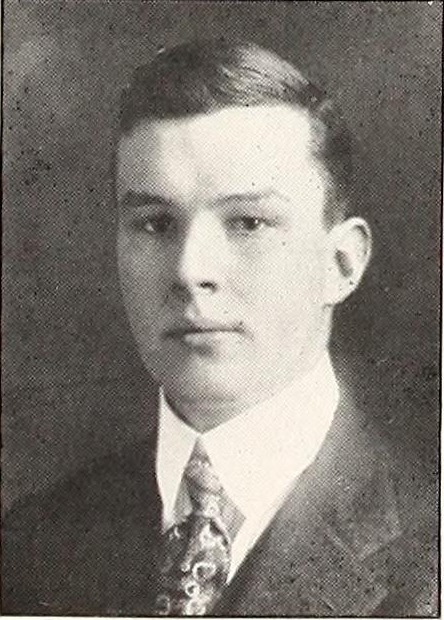
Sources and credit for Haskell Curry
Photographer not identified. Harvard Class Album, 1920, p. 173; Allen County Public Library via Internet Archive. Portrait extracted from the page; no retouching. Image source · Public domain (published before 1931) · Biographical dates
Related ideas appeared in work by de Bruijn on Automath and by Martin-Löf on constructive type theory. The modern name joins some of these threads without exhausting their history.
Wadler's historical presentation is useful for tracing the contributions and explaining why several discoveries and rediscoveries belong to the account.
Extending the correspondence
For an appropriate intuitionistic calculus, the connection extends beyond implication.
| Logical construction | Type construction | Proof or term behavior |
|---|---|---|
| Function type | Transform an input of type into an output of type | |
| Product type | Supply a pair and project either component | |
| Sum type | Supply a tagged alternative and analyze both cases | |
| Truth | Unit type | Supply its canonical inhabitant |
| Falsehood | Empty type | Eliminate an impossible inhabitant |
For conjunction, a pair represents the combined proof. Projecting its first component reduces to , matching the elimination of a conjunction-introduction detour.
For disjunction, a tag records which alternative has been supplied. Eliminating it requires a construction for each case. The tag is part of the evidence; an unstructured claim that one of two propositions holds does not yet explain the elimination rule.
Dependent products and sums extend the account to quantifiers. Their additional structure belongs in the next note.
Functions and products provide enough structure to inspect the correspondence directly. The lab checks each typed reduction against its original judgment; its separate untyped examples prepare the question of termination that follows.
Interactive lab · Proofs, types, and computation
Check a term, then watch its proof normalize
Reduce a term one step at a time. Inspect the corresponding proof and the judgment preserved by each typed step.
Before you check: How many β steps are needed to reach a?
Simply typed lambda calculus
Edit the term and its assumptions
Syntax and rules
Write fun x: A => x for an abstraction, f(a) for application, pair(a, b) for pairing, and fst(h) or snd(h) for projections. Write A -> B for a function type and A * B for a product. Parentheses make grouping explicit.
Atomic types begin with an uppercase letter; term variables begin with a lowercase letter. Untyped functions may omit their type annotation. Each reduction uses capture-avoiding substitution. The displayed proof is in this small calculus.
Check the starting term to obtain its type and proof tree.
Hint
The first application substitutes a for x. The second substitutes b for y, but y is not used in the body.
Try a variation
Step through the reductions and inspect the proof tree before and after. Its final judgment is preserved.
Scope and notation
Scope: simply typed lambda calculus with atomic types, functions, and products. Typed normal-order reduction includes reductions inside abstractions. Untyped mode makes no proof claim; call-by-value is weak and does not reduce inside a function body until application. Runs are bounded to 100 steps and 1,500 term nodes. A bound does not establish divergence.
Why an arbitrary program is not a proof
The simply typed lambda calculus, with its standard rules and without unrestricted recursion, is strongly normalizing: every reduction sequence terminates.
This matters logically. Under the intended empty-type interpretation, a closed term of the empty type would represent a proof of falsehood. A sound normalization argument helps exclude such a term by analyzing possible normal forms.
Now add an unrestricted fixed-point operator at every type. A recursive definition can diverge while being assigned a type whose logical reading would be absurd. General-purpose type safety may ensure that a program does not perform certain invalid operations, while leaving termination unproved.
Thus a language can be well typed and still fail to support the direct interpretation “every program of this type is a terminating proof of this proposition.”
Effects, exceptions, control operators, and evaluation strategy introduce further distinctions. Some have sophisticated logical interpretations, including connections with classical logic, but each interpretation needs its own formal account.
What the correspondence made possible
The correspondence gave proof checking a computational organization. A proposition could be represented by a type, a proof by a term, and a basic proof transformation by reduction.
It also gave programming languages a logical vocabulary for abstraction, composition, and specification. Those consequences developed along different paths: richer foundational type theories, categorical semantics, and executable functional languages.
We follow those paths separately so that the history does not jump directly from Church to a modern proof assistant without explaining the intervening mathematics.
Sources and further reading
- Moses Schönfinkel, “Über die Bausteine der mathematischen Logik” (1924).
- Alonzo Church, “A Set of Postulates for the Foundation of Logic” (1932–1933); Church and J. Barkley Rosser, “Some Properties of Conversion” (1936).
- Alonzo Church, “A Formulation of the Simple Theory of Types” (1940).
- Haskell B. Curry and Robert Feys, Combinatory Logic, volume I (1958).
- William A. Howard, “The Formulae-as-Types Notion of Construction,” manuscript of 1969, published in To H. B. Curry: Essays on Combinatory Logic, Lambda Calculus and Formalism (1980).
- Philip Wadler, “Propositions as Types” (2015).